Sean Connelly
(B. Hawai‘i)Operates at the intersection of contemporary art, architecture, and oceanic futures, producing work that reshapes spatial, cultural, and institutional systems.
About
Sean is an artist and spatial practitioner working across contemporary art, spatial practice, and civic engagement. His practice integrates sculpture, moving image, cartography, and site-based intervention to examine relationships between land, water, architecture, and power. Grounded in archipelagic and oceanic ways of knowing, the work approaches place as an interconnected familial, ecological, cultural, and political system rather than a fixed site.
Sean’s projects are realized through exhibitions, installations, public artworks, film and video, and long-term spatial and civic initiatives. Situated within the expanded field of sculpture and in dialogue with land art, cartographic practices, and institutional critique, the work treats form, site, and research as inseparable. Sculptural and moving-image works often function as spatial propositions—testing how materials, maps, and architectures can register historical erasure, environmental transformation, and alternative futures.
A defining aspect of Sean’s practice is the extension of artistic inquiry beyond the exhibition context and into the place-based conditions it addresses. Through their civic practice After Oceanic and the grassroots nonprofit Hawaiʻi Nonlinear, projects are developed as applied, durational works that embed artistic methods within real sites, communities, and governance frameworks. These platforms are not just ancillary professional roles but primary structures through which the work’s spatial, ecological, and political questions are enacted and sustained over time—where the transformations proposed by the artwork become materially and socially operative.
Sean’s work engages sites shaped by settler colonialism, militarization, and extractive development, often focusing on infrastructures of water, land division, and urbanization in Hawaiʻi and across the Pacific. Imagination operates in the practice as a practical tool, supporting forms of repair, stewardship, and collective responsibility at human and regional scales rather than functioning solely as symbolic representation.
Sean has presented work in solo and group exhibitions, public commissions, and biennials in the United States and internationally, including major museum contexts and triennials. The practice has been supported by artist residencies and fellowships and has been written about extensively by art historians, architects, and cultural critics. Sean has also designed and taught courses in leading university and public forums and serves in cultural leadership roles in Hawaiʻi. Writing and research by and about the work appear in scholarly journals, exhibition catalogs, and public platforms.
Informed by intergenerational, familial, and matriarchal relationships to Hawaiʻi, Sean’s practice understands art as cultural infrastructure—capable of holding historical complexity while contributing to long-term ecological, social, and spatial futures.
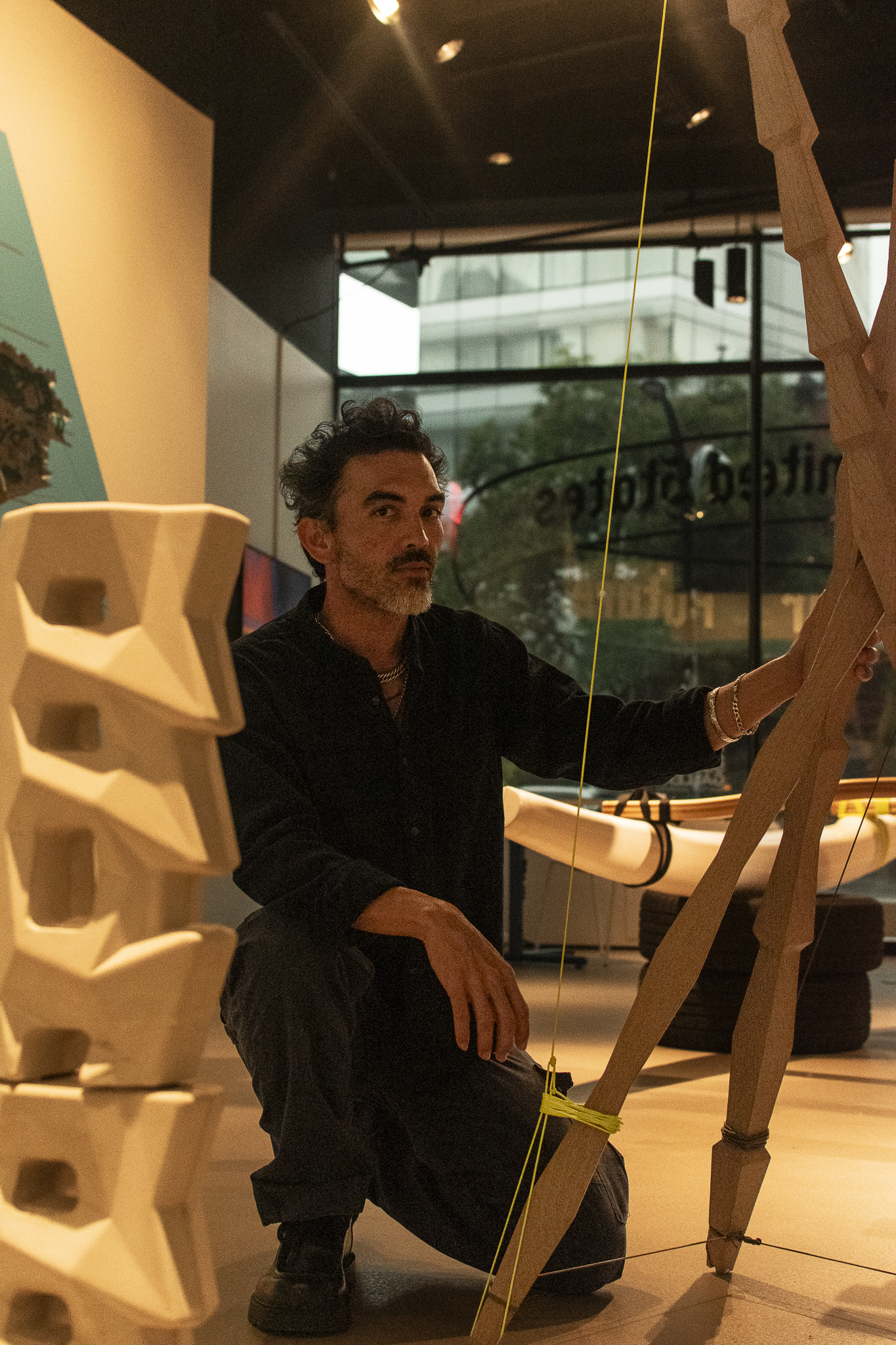
Artist Portrait by
Ricardo Pinnock
O ke kahua mamua, mahope ke kūkulu.
Site first, then the building.
Learn all you can, then practice.
‘Ōlelo No‘eau. #2459
Artist Statement
My work emerges from long-standing familial and community relationships to land, water, food, and place, and from a practice grounded in the built environment. I approach art as a form of spatial inquiry—one that understands architecture, landscape, and infrastructure as cultural records shaped by power, memory, and responsibility. Through sculpture, moving image, cartography, and site-based intervention, I examine how material, time, space, energy, and information intersect with histories of settler colonialism, militarization, and extraction that continue to structure everyday life.
I often describe my role as operating between that of an expert witness, a geomancer mystic, and an idea doula. As an expert witness, I draw upon architectural and spatial knowledge to read environments as evidence—interpreting how land is divided, governed, and occupied. As a geomancer mystic, I attend to less visible forces of place, including geology, water, ancestry, and time, treating land not as a surface to be used, but as a living system that holds intelligence. As an idea doula, I help bring emergent ideas into form, guiding them through processes of care, testing, and collective responsibility. These roles are not metaphors; they shape how work is sited, constructed, documented, and activated.
My practice moves between exhibitions, public artworks, film installations, and long-term civic initiatives developed in collaboration with communities, cultural practitioners, and institutions. I do not distinguish sharply between art, advocacy, and research. Instead, I treat these modes as interdependent, allowing discrete artworks to function as sites of inquiry within broader spatial and civic processes. Materials, structures, and images become ways of thinking—tools for testing how imagination can produce real effects at human and regional scales.
Questions of identity and place are present throughout my work, though not as fixed categories. I identify as a Illocano, Pacific-Islander-American (a distinction from Pacific Islander or Filipino), or in ‘Ōlelo Hawai‘i, he kanaka [Hawai‘i] Pākīpika-ʻAmelika a he Ilokano -- shaped by diasporic histories. My relationship to place is informed by both inheritance and responsibility. I am attentive to how identities are formed through displacement, occupation, and survival, and to how these conditions demand new spatial and cultural frameworks rather than nostalgic return. While grounded in Hawaiʻi, the work speaks outward to other sites shaped by similar forces.
Ultimately, my practice is concerned with space, time, and flow—how the past is embedded in the ground beneath us, and how futures are shaped by decisions made in the present. I understand art as cultural infrastructure: something that can hold complexity, sustain long-term thinking, and contribute to conditions of collective care and continuity across generations.
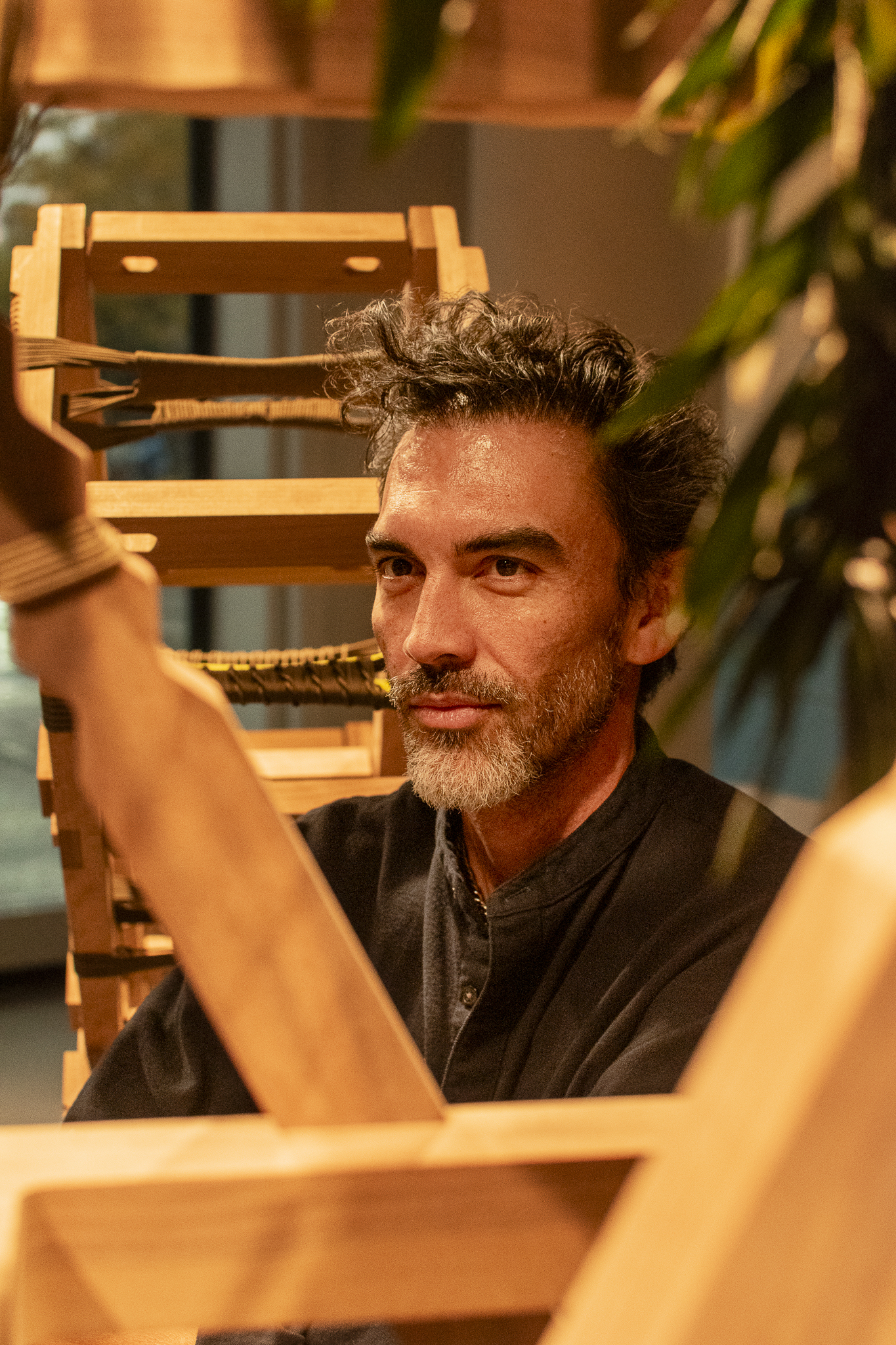
Artist Portrait by
Ricardo Pinnock