O ke kahua mamua, mahope ke kūkulu.
Site first, then the building.
Learn all you can, then practice.
‘Ōlelo No‘eau. #2459
Artist Statement
My work emerges from long-standing familial and community relationships to land, water, food, and place, and from a practice grounded in the built environment. I approach art as a form of spatial inquiry—one that understands architecture, landscape, and infrastructure as cultural records shaped by power, memory, and responsibility. Through sculpture, moving image, cartography, and site-based intervention, I examine how material, time, space, energy, and information intersect with histories of settler colonialism, militarization, and extraction that continue to structure everyday life.
I often describe my role as operating between that of an expert witness, a geomancer mystic, and an idea doula. As an expert witness, I draw upon architectural and spatial knowledge to read environments as evidence—interpreting how land is divided, governed, and occupied. As a geomancer mystic, I attend to less visible forces of place, including geology, water, ancestry, and time, treating land not as a surface to be used, but as a living system that holds intelligence. As an idea doula, I help bring emergent ideas into form, guiding them through processes of care, testing, and collective responsibility. These roles are not metaphors; they shape how work is sited, constructed, documented, and activated.
My practice moves between exhibitions, public artworks, film installations, and long-term civic initiatives developed in collaboration with communities, cultural practitioners, and institutions. I do not distinguish sharply between art, advocacy, and research. Instead, I treat these modes as interdependent, allowing discrete artworks to function as sites of inquiry within broader spatial and civic processes. Materials, structures, and images become ways of thinking—tools for testing how imagination can produce real effects at human and regional scales.
Questions of identity and place are present throughout my work, though not as fixed categories. I identify as a Illocano, Pacific-Islander-American (a distinction from Pacific Islander or Filipino), or in ‘Ōlelo Hawai‘i, he kanaka [Hawai‘i] Pākīpika-ʻAmelika a he Ilokano -- shaped by diasporic histories. My relationship to place is informed by both inheritance and responsibility. I am attentive to how identities are formed through displacement, occupation, and survival, and to how these conditions demand new spatial and cultural frameworks rather than nostalgic return. While grounded in Hawaiʻi, the work speaks outward to other sites shaped by similar forces.
My practice is concerned with space, time, and flow—how the past is embedded in the ground beneath us, and how futures are shaped by decisions made in the present. I understand art as cultural infrastructure: something that can hold complexity, sustain long-term thinking, and contribute to conditions of collective care and continuity across generations.
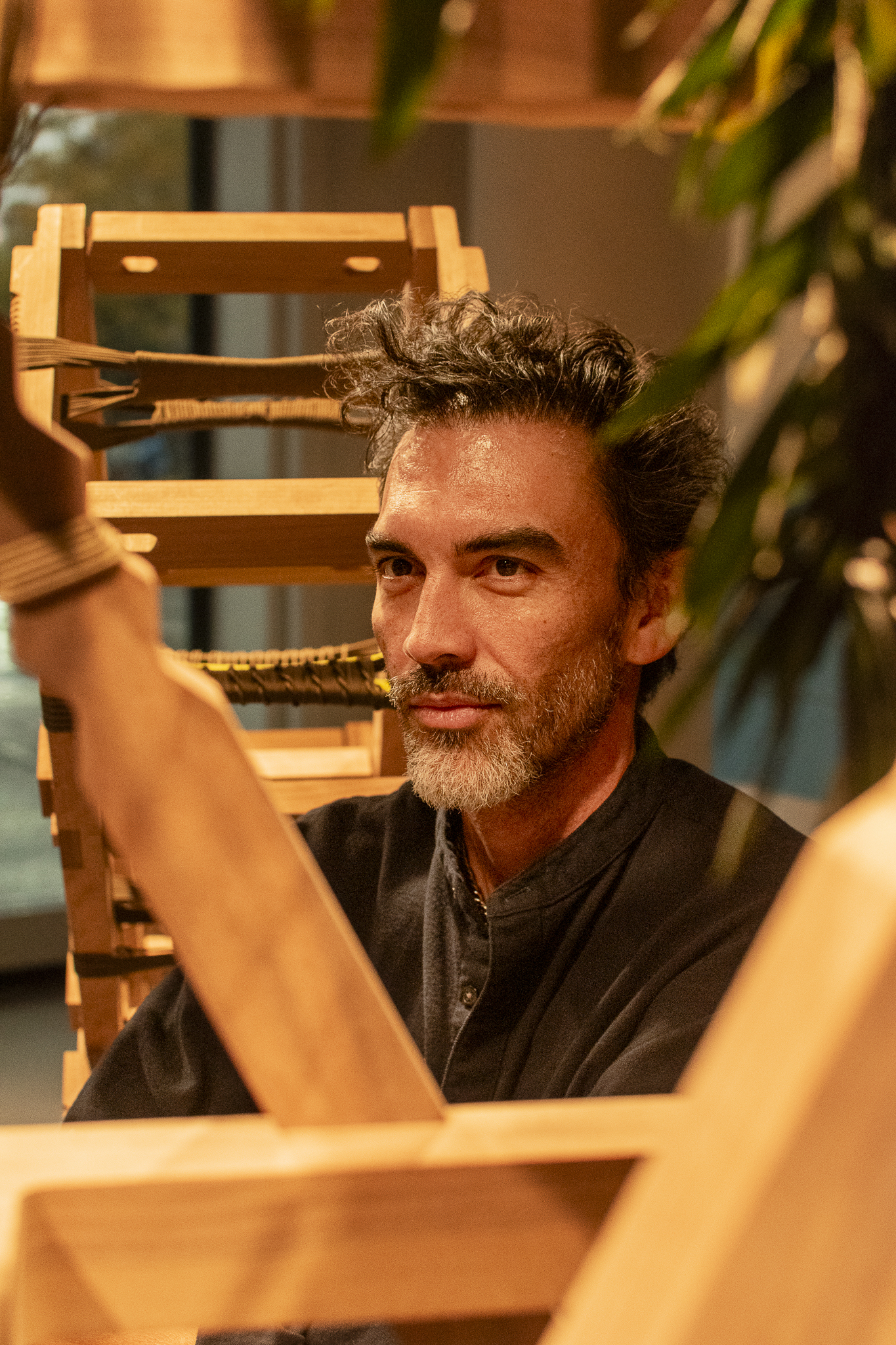
Artist Portrait by
Ricardo Pinnock
︎︎︎